
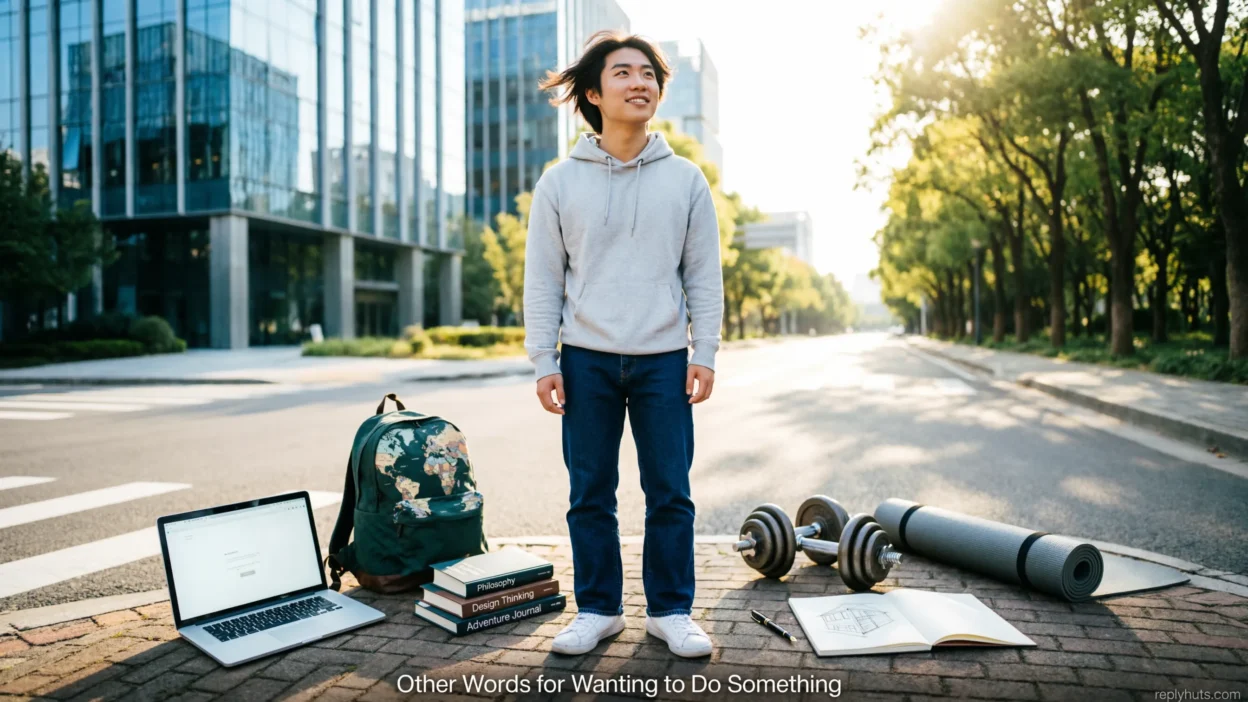
Sometimes, saying “I want to do something” can feel repetitive or too simple.
If you’re writing professionally, chatting casually, or improving your vocabulary, using different expressions can make your communication sound more natural and engaging.
There are many creative, polite, and expressive alternatives that describe desire, motivation, enthusiasm, or willingness.
From formal phrases like “eager to” to casual expressions like “up for,” these alternatives help you express emotions and intentions more clearly in conversations, emails, essays, and social media captions.
1. Eager To
Best for: Showing excitement and enthusiasm
Alternative: Excited to
Examples:
I’m eager to start my new project next week.
She was eager to learn more about photography.
This phrase works well when you want to sound positive and motivated.
2. Interested In
Best for: Casual and professional conversations
Alternative: Curious about
Examples:
He’s interested in joining the football team.
I’m interested in learning Spanish this year.
It’s a versatile phrase that sounds polite and natural.
3. Keen To
Best for: British English and friendly communication
Alternative: Ready to
Examples:
She’s keen to try the new restaurant downtown.
I’m keen to hear your thoughts on the idea.
“Keen to” expresses genuine enthusiasm.
4. Motivated To
Best for: Work, school, and self-improvement
Alternative: Driven to
Examples:
He’s motivated to improve his fitness level.
I feel motivated to finish my goals this month.
This phrase highlights determination and purpose.
5. Willing To
Best for: Cooperation and teamwork
Alternative: Open to
Examples:
I’m willing to help with the presentation.
They were willing to give the plan another chance.
It suggests readiness without sounding too emotional.
6. Ready To
Best for: Immediate action
Alternative: Prepared to
Examples:
She’s ready to launch her business.
I’m ready to move forward with the decision.
This phrase shows confidence and preparedness.
7. Looking Forward To
Best for: Future plans and events
Alternative: Anticipating
Examples:
I’m looking forward to the concert this weekend.
They’re looking forward to meeting the new manager.
It creates a warm and positive tone.
8. Hoping To
Best for: Dreams and expectations
Alternative: Planning to
Examples:
I’m hoping to travel abroad next summer.
She’s hoping to get promoted soon.
This sounds optimistic and sincere.
9. Planning To
Best for: Goals and organization
Alternative: Intending to
Examples:
We’re planning to renovate the kitchen.
I’m planning to start a podcast this year.
It suggests thoughtfulness and preparation.
10. Intending To
Best for: Formal writing and professional tone
Alternative: Aiming to
Examples:
He’s intending to apply for the scholarship.
They’re intending to expand the company soon.
This alternative sounds polished and clear.
11. Aiming To
Best for: Achievement and ambition
Alternative: Striving to
Examples:
She’s aiming to improve her public speaking skills.
I’m aiming to save more money this year.
It communicates focus and ambition.
12. Striving To
Best for: Personal growth and hard work
Alternative: Working toward
Examples:
He’s striving to become a better leader.
They’re striving to achieve success together.
This phrase emphasizes effort and persistence.
13. Yearning To
Best for: Emotional or deep desires
Alternative: Longing to
Examples:
She was yearning to see her family again.
I’m yearning to explore new places.
It adds emotional depth to your sentence.
14. Longing To
Best for: Strong emotional feelings
Alternative: Craving
Examples:
He was longing to return home.
They’re longing to spend time together again.
This expression feels heartfelt and emotional.
15. Craving To
Best for: Strong wants and desires
Alternative: Desperate to
Examples:
I’m craving to take a relaxing vacation.
She was craving to try something adventurous.
It adds intensity to your statement.
16. Desperate To
Best for: Urgent desires
Alternative: Dying to
Examples:
He’s desperate to find a new job.
I’m desperate to hear the final results.
Use this when the feeling is strong and urgent.
17. Dying To
Best for: Informal excitement
Alternative: Can’t wait to
Examples:
I’m dying to watch the new movie tonight.
She’s dying to share her big news.
This phrase sounds energetic and fun.
18. Can’t Wait To
Best for: Everyday conversations
Alternative: Excited to
Examples:
I can’t wait to visit the beach.
They can’t wait to celebrate together.
It’s one of the most common enthusiastic expressions.
19. Dreaming Of
Best for: Aspirations and imagination
Alternative: Fantasizing about
Examples:
She’s dreaming of owning her own café.
I’m dreaming of a peaceful vacation.
This phrase feels creative and inspiring.
20. Thinking About
Best for: Casual discussions
Alternative: Considering
Examples:
I’m thinking about changing careers.
He’s thinking about joining the gym.
It sounds thoughtful and relaxed.
21. Considering
Best for: Decision-making situations
Alternative: Debating
Examples:
She’s considering moving to another city.
We’re considering adopting a pet.
This phrase works well in formal and casual settings.
22. Tempted To
Best for: Fun or risky situations
Alternative: Inclined to
Examples:
I’m tempted to buy the new phone.
He was tempted to skip work today.
It suggests a strong attraction toward something.
23. Inclined To
Best for: Formal conversations
Alternative: Leaning toward
Examples:
I’m inclined to agree with your opinion.
She’s inclined to accept the offer.
This sounds professional and balanced.
24. Up For
Best for: Informal plans and invitations
Alternative: In the mood for
Examples:
Are you up for a road trip this weekend?
I’m up for trying something different.
This phrase feels friendly and casual.
25. In the Mood For
Best for: Relaxed conversations
Alternative: Feel like
Examples:
I’m in the mood for pizza tonight.
She’s in the mood for a comedy movie.
It’s commonly used for preferences and cravings.
26. Feel Like
Best for: Everyday speech
Alternative: Want to
Examples:
I feel like going for a walk.
They feel like watching a movie tonight.
This is a simple and natural expression.
27. Passionate About
Best for: Hobbies and career interests
Alternative: Dedicated to
Examples:
She’s passionate about helping others.
I’m passionate about graphic design.
It highlights strong interest and commitment.
28. Dedicated To
Best for: Commitment and hard work
Alternative: Committed to
Examples:
He’s dedicated to improving his skills.
They’re dedicated to community service.
This phrase sounds sincere and professional.
29. Excited To
Best for: Positive announcements
Alternative: Thrilled to
Examples:
I’m excited to begin this journey.
She’s excited to meet everyone tomorrow.
It instantly adds energy and positivity.
30. Thrilled To
Best for: Big moments and celebrations
Alternative: Overjoyed to
Examples:
We’re thrilled to announce our new launch.
He was thrilled to receive the award.
This phrase expresses strong happiness and enthusiasm.
FAQs:
What is another word for wanting to do something?
Some common alternatives include “eager to,” “interested in,” “keen to,” “motivated to,” and “ready to.”
Which phrase sounds most professional?
“Intending to,” “planning to,” and “considering” are professional and suitable for workplace communication.
What are casual alternatives to “want to”?
Casual phrases include “feel like,” “up for,” and “can’t wait to.”
How can I sound more expressive in writing?
Use emotional alternatives like “thrilled to,” “yearning to,” or “passionate about” to add personality and emotion.
Are these phrases useful in essays and emails?
Yes, these alternatives improve readability, reduce repetition, and make your writing sound more polished and natural.
Conclusion
Using other words for wanting to do something can instantly improve your conversations, writing, and overall communication skills.
If you want to sound professional, emotional, casual, or enthusiastic, these alternatives help you express yourself more naturally and clearly.
Try mixing these phrases into your daily speech, emails, captions, or essays to make your language more engaging and memorable.

Justin Larry is a creative writer and communication enthusiast, contributing expert content to ReplyHuts.com. He focuses on crafting witty, thoughtful, and practical replies for modern conversations. With a passion for language and digital trends, Justin helps readers respond confidently across social media, relationships, and everyday interactions with clarity.